
A fender bender in a parking lot, hail pounding the hood, a nighttime theft: each incident confirms that choosing car insurance involves much more than just the premium. The contract you sign determines what will be covered, to what extent, and especially what will not be covered. Understanding the guarantees, pricing mechanisms, and common pitfalls helps avoid paying twice.
Repair Costs and Car Insurance Premiums: The Direct Link
Before comparing policies, one point deserves attention. The price of your insurance largely depends on the cost of repairs after an accident. According to the Automobile Security and Repair Association (SRA), the cost of repairs after a collision has significantly increased between 2021 and 2025.
The reason is technical. Recent vehicles come equipped with sensors, rear radars, and driving assistance cameras. Replacing a bumper loaded with sensors is much more expensive than a standard bumper. The price of spare parts follows the same upward trend.
This mechanism explains why two drivers with identical profiles may see their premiums change differently from year to year. An insurer that observes an increase in the average cost of claims in its portfolio passes this burden onto all its policyholders. Comparing the insurance options offered by Auto XP with other market offers remains the most effective reflex to measure the real difference between two contracts with equivalent guarantees.
A lesser-known lever: reuse parts reduce the cost of certain repairs. The SRA notes their increasing presence in repairs approved by an expert, which can help limit the overall bill of a claim.

Car Insurance Policies: Third Party, Intermediate, and Comprehensive
You may have noticed that quotes often mention three levels of coverage? Each corresponds to a specific scope of guarantees.
Third Party Insurance: The Legal Minimum
The law requires only one thing: to cover the damage your vehicle may cause to others. This is liability insurance. If you hit another vehicle, your insurer compensates the other driver. Your own damages are not covered.
Third party insurance is suitable for an old vehicle whose resale value is low. Paying a high premium to protect a car worth less than the deductible makes no financial sense.
Intermediate Policy (Extended Third Party)
This adds targeted guarantees to the mandatory base:
- Theft and attempted theft, usually with a fixed deductible deducted from the compensation
- Fire, including damage caused by an act of vandalism by fire
- Glass breakage, which covers the replacement of the windshield, side windows, and rear window
- Natural disasters and weather events (hail, storm, flood)
This policy represents a coherent compromise for a recent used vehicle, whose value still justifies partial protection.
Comprehensive Insurance
This covers your own damages even if you are at fault for the accident. It is the most complete and most expensive option. A new or high-end vehicle almost always justifies comprehensive coverage.
Some comprehensive contracts include a new value guarantee, which reimburses the vehicle at its purchase price in case of theft or total destruction, for a limited time after acquisition.
Optional Guarantees and Exclusions: What the Contract Doesn’t Emphasize Enough
The chosen policy tells only part of the story. The options and exclusions make the real difference between two contracts displaying the same price.
Deductible: The Amount You Are Responsible For
After a claim, the insurer does not reimburse everything. The deductible is the amount you keep as your responsibility. A low deductible increases the premium, a high deductible reduces it. Before signing, simulate the cost of a common claim (glass breakage, fender bender) with the deductible specified in the contract.
Electric Vehicles: A Special Case
The repair of an electric car can be more expensive, particularly due to the battery. However, this does not automatically make insurance more expensive in all cases. What matters is to check the guarantees and exclusions specific to the battery, rather than relying solely on the type of engine.
Car Insurance Pricing Criteria: What Affects the Price
Why do two drivers driving the same car not pay the same premium? Because the insurer assesses an individual risk, not just a vehicle.
- The driver’s profile: age, length of the driving license, claims history (the famous bonus-malus coefficient)
- The type of vehicle: tax horsepower, value, average repair cost according to the SRA
- The usage: annual mileage, parking in a garage or on the street, home-work trips
- The geographical area: some cities have higher concentrations of thefts or accidents
A young driver will pay significantly more than an experienced driver with a maximum bonus, even for a modest city car. The bonus-malus remains the most powerful lever in the long term.
End of the Green Card and Digital Verification
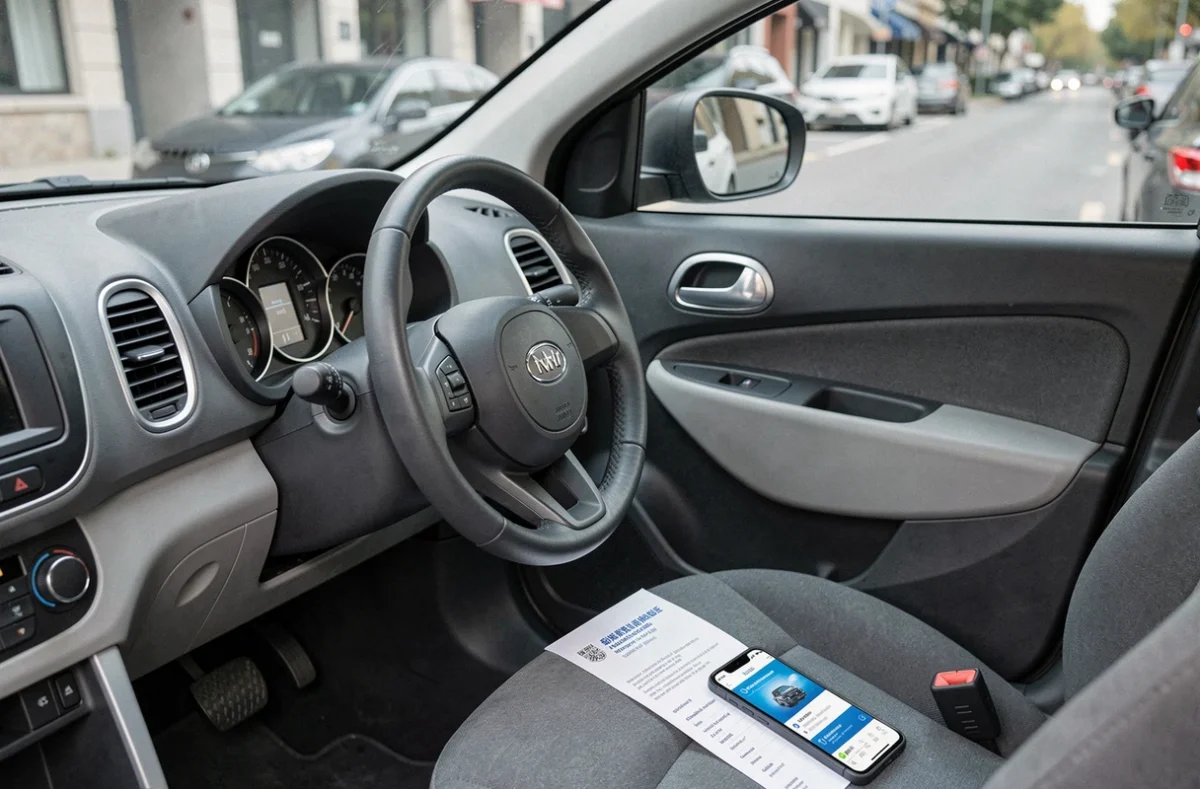
As of April 1, 2024, proof of insurance no longer relies on the paper green card. Decree No. 2023-1152 of December 8, 2023, established the Insured Vehicles File (FVA). After subscribing, check that your vehicle is indeed listed in this file.
In case of a roadside check, law enforcement consults the FVA directly. If your vehicle is not listed (update delay, administrative error), you risk a fine even though you are insured. A simple check on the FVA website after signing the contract is enough to avoid this situation.
The choice of car insurance is based on three concrete decisions: the level of coverage suited to the actual value of your vehicle, the amount of deductible you are willing to bear in case of a claim, and the line-by-line verification of the contract’s exclusions. The displayed price is just a starting point, never a sufficient criterion.