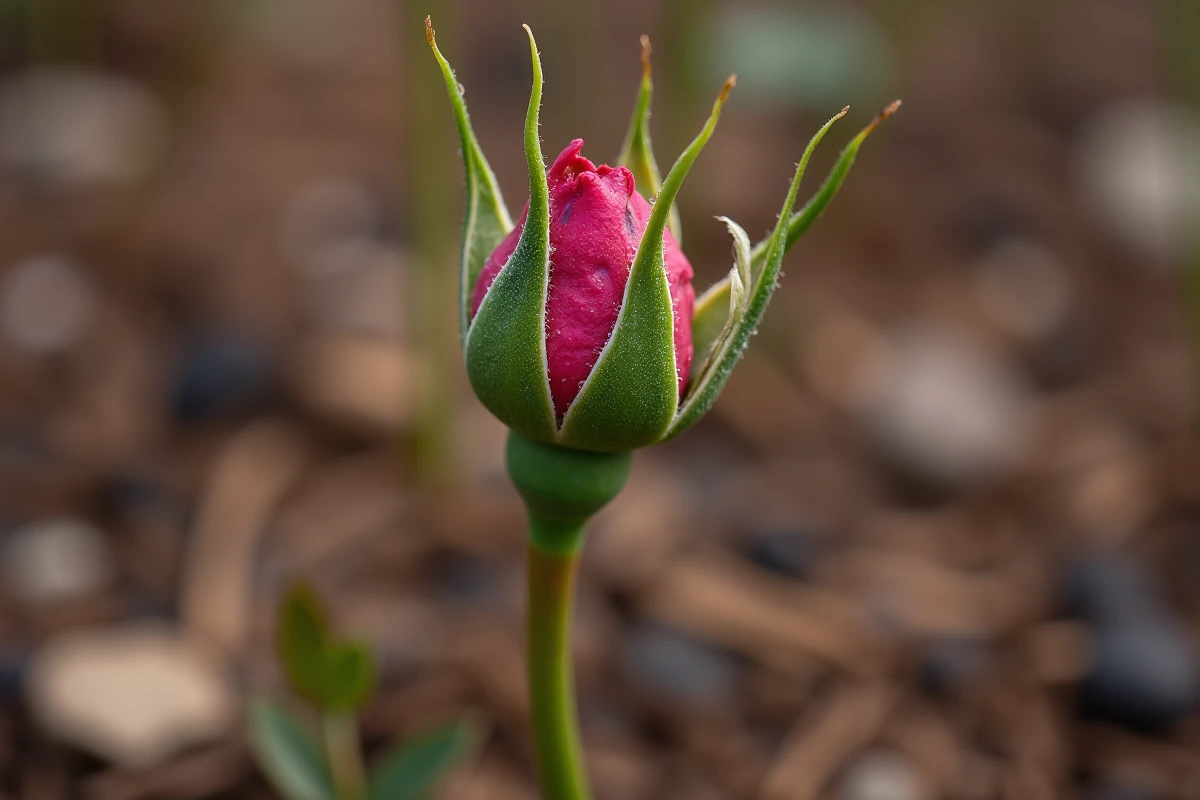
Have you ever noticed those small bulges on the stems of your rose bushes, just above where a leaf joins the branch? These discreet points, called rose eyes, are the axillary buds that determine the future of the plant. Knowing how to spot, assess, and prune based on their condition radically changes how a rose bush grows, blooms, and survives climatic challenges.
Diagnosing the viability of the eyes after frost or water stress
After a harsh winter or prolonged drought, the first question is simple: will the rose bush regrow? The answer is directly visible on its eyes.
A viable eye is slightly swollen, firm to the touch, and shows a greenish or pinkish hue when you gently scrape the bark just above it. If the eye is brown, dry, or crumbles under your nail, it is dead. Before severely pruning a weakened rose bush, methodically inspect the stem from top to bottom to locate the first healthy eye.
A rose bush that has at least two viable eyes per main stem can regrow, even after serious stress. If no eye shows signs of life on the aerial part, there is still a possibility: dormant eyes located below the grafting point or at the base of the collar. These buds, which may remain inactive for years, can reactivate when the plant mobilizes its last reserves.
To delve into the characteristics and importance of the rose eye, it is essential to understand that not all eyes are equal: their position on the stem, their orientation, and their physiological state condition their recovery.
Active, dormant, and adventitious eyes: three categories to distinguish when pruning
This distinction is rarely explained, yet it changes everything at the time of pruning.
- Active eyes are those that visibly swell in spring and produce new growth in the weeks following pruning. They are generally located on last year’s wood, in the upper third of the stems.
- Dormant eyes remain invisible or barely perceptible for one or more seasons. They constitute the rose bush’s backup reserve. It is thanks to them that a severely pruned or frost-damaged rose bush can regrow from the base.
- Adventitious eyes form on old wood, sometimes in unusual areas (near the collar, on an old pruning scar). Their appearance often signals that the plant is compensating for a loss of buds elsewhere.
When you prune, identify which type of eye you are cutting above. An active eye oriented outward will produce a branch that opens up the center of the rose bush. A dormant eye stimulated by severe pruning will take longer to start but often produces vigorous growth.
Pruning rose bushes above the eye: the technique that makes a difference
Pruning “above an eye” is advice every gardener has heard. But the precision of the cut is as important as the principle.
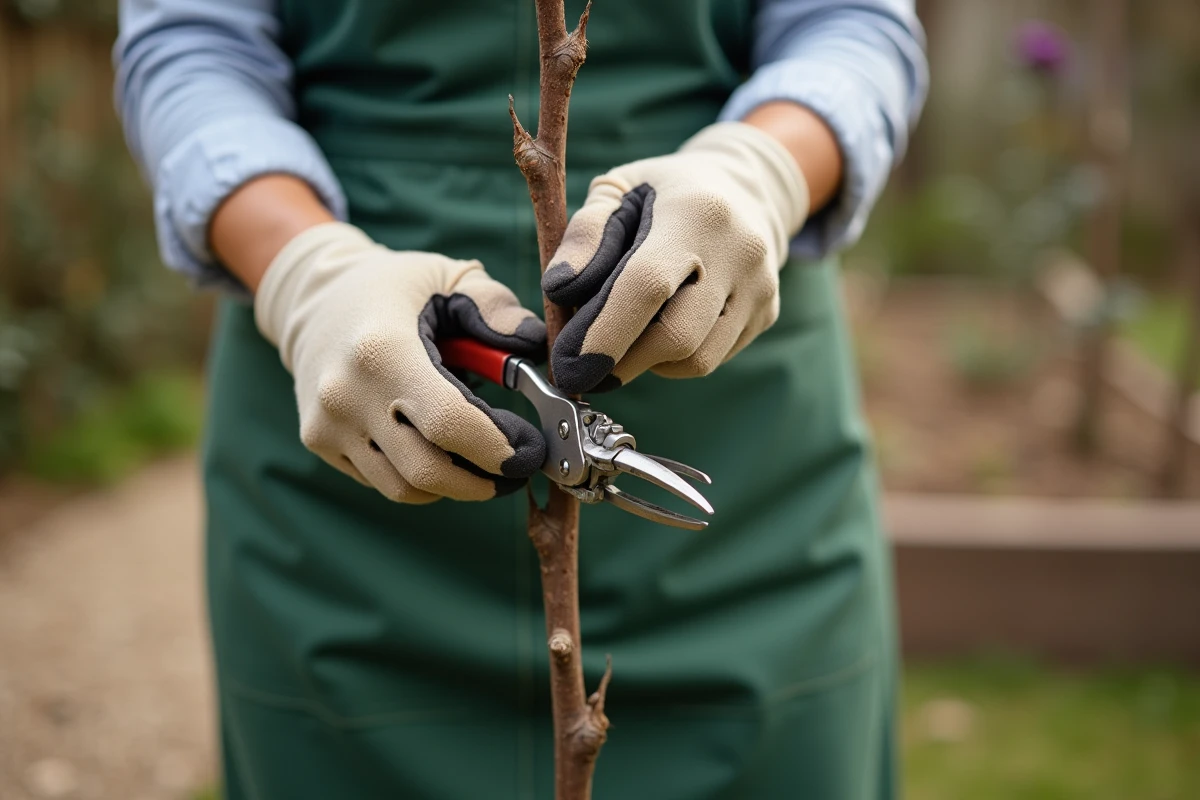
The cut should be made at an angle, about half a centimeter above the chosen eye, with the secateurs tilted in the opposite direction to the bud. This tilt prevents rainwater from pooling on the eye and reduces the risk of rot.
Common mistakes to avoid with the secateurs
Cutting too far from the eye leaves a stub that dries out and can become an entry point for diseases. Cutting too close risks damaging the bud itself.
Use clean, sharp secateurs: a clean cut heals faster than a crush. Disinfect the blade between each rose bush if you suspect the presence of fungal diseases.
Have you noticed that an eye points inward toward the bush? It’s better to choose the one below, oriented outward. Growth will follow this direction, and the center of the rose bush will remain airy, which limits foliage problems related to stagnant moisture.
Grafting by budding: when the rose eye becomes a multiplication tool
Budding grafting relies entirely on the quality of a single eye. The technique is generally practiced from early August to late September, when the bark of the rootstock easily peels away.
The principle: a healthy, vigorous eye is taken from the desired variety, along with a thin slice of bark (the bud), and then inserted under the bark of the rootstock at the collar level. The contact between the bud and the cambium of the rootstock must be perfect for the graft to take.
The choice of the eye to be taken is crucial. Select a well-formed bud on a stem from the current year, neither too young (it won’t have enough reserves) nor located on overly lignified wood (the recovery will be more difficult). An eye taken from the middle of a recent flowering branch often yields the best results.
Signs of a successful or failed graft
Two to three weeks after grafting, an eye that remains green and slightly swollen indicates a successful graft. If it turns black or dries out, the graft has failed. In this case, you can try again on the same rootstock, provided you choose a healthy spot on the collar.
A well-grafted bud will produce its first shoot the following spring. This patience is normal: the eye enters winter dormancy after the summer graft and only reactivates with the return of warm temperatures.
Rose bush care to preserve the vitality of the eyes throughout the season
Rose eyes only function well if the plant has enough resources. A nutrient-deficient rose bush will produce weak buds, resulting in slender stems and poor flowering.
- Maintain rich, well-drained soil around the base. Rose bushes are greedy: adding organic matter in early spring supports the growth of new buds.
- Water at the base, not on the foliage. Moisture on the leaves promotes fungal diseases that can weaken the plant and compromise the formation of new eyes.
- Remove faded flowers by cutting just above the first outward-facing eye, located below the flower. This action redirects energy toward the production of new floral shoots rather than fruit formation.
A rose bush whose eyes are regularly stimulated by thoughtful pruning and appropriate care develops dense branching, healthy foliage, and repeated blooms. The careful observation of these small buds, season after season, remains the most useful gesture a gardener can learn when tending to their roses.