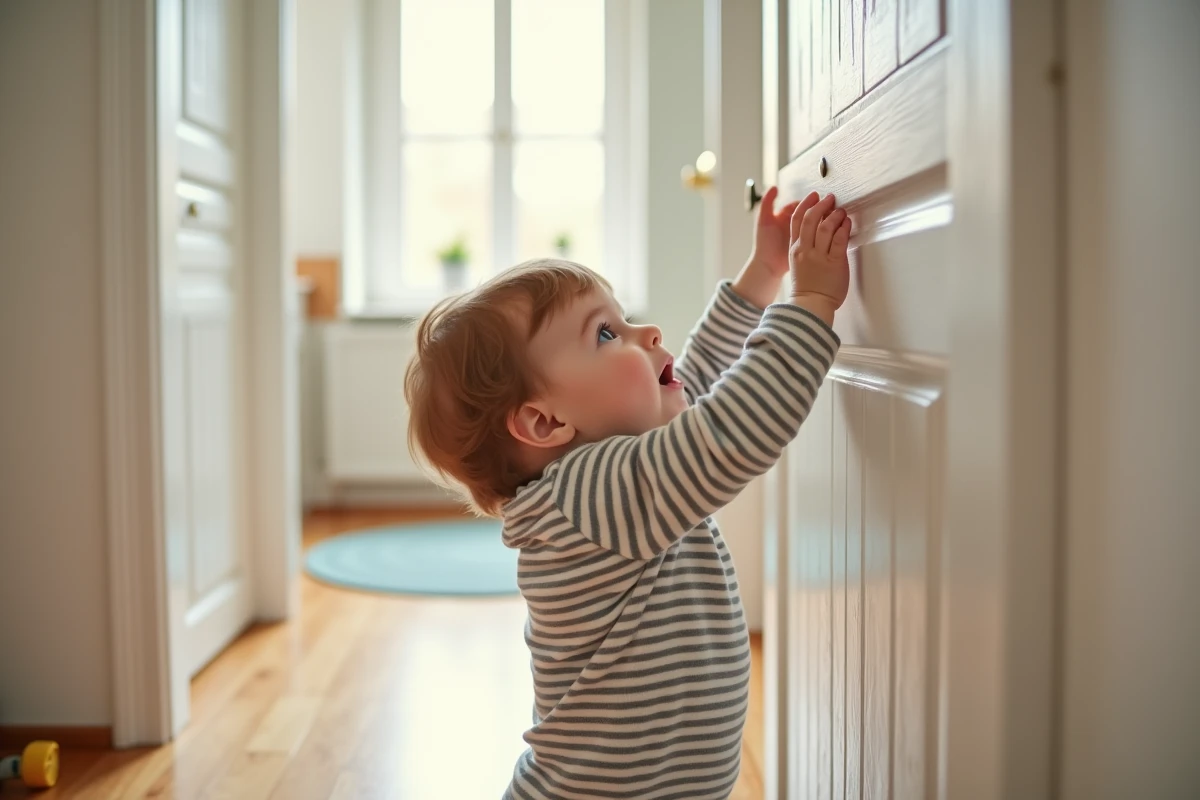
Forget the wise timeline or linear steps: for some children, the doorknob becomes an object of study long before their first birthday. Starting at 9 months, we observe them, hesitant yet determined, trying to understand what lies behind this simple gesture for adults. Between 12 and 18 months, some finally decode the mechanism, daring to open it, as long as the knob is within reach… and motivation is present. This small feat often marks the beginning of a frenzied exploration of everything the house has to offer.
The path to this skill is not written on a single page. Neurological factors, muscle development, social interactions: everything intertwines. Imitation plays its role, a passing sibling, a parent demonstrating, repetition does its work, and every encouragement, even discreet, paves the way for new attempts.
Understanding the major milestones of psychomotor development between 9 and 12 months
Between 9 and 12 months, psychomotor development takes on its full scope. The child no longer just observes: they act, refine their movements, and claim their space. Fine motor skills develop, the pincer grip becomes the favorite tool for exploring, grasping, and manipulating. Sitting or crawling, sometimes standing while holding onto a coffee table, they experiment with balance and autonomy.
Curiosity sharpens: every door, every knob, every intriguing object calls for action. Everything becomes an excuse to exercise motor control, coordinate eye and hand, and test the resilience of everyday objects.
Here are the major milestones often observed during this period:
- Gross motor skills: movement, changes in position, first steps sometimes attempted around 12 months.
- Fine motor skills: voluntary grasping, precise movements, manipulation of objects of various sizes and textures.
- Cognitive development: beginning to understand cause-and-effect relationships, memorizing successful actions, anticipating the results of their actions.
To encourage this dynamic, there are many suitable activities: games to open and close, stacking cubes, boxes with various shapes. Relying on the advice from Family 2 Family helps refine choices and provide a stimulating environment, respectful of each child’s unique pace.
Why does baby start opening doors at this age?
Imagine the scene: a toddler, focused face, raises their hand towards the knob, observes the mechanism, tries, and tries again. This gesture, far from trivial, marks a major step towards independence. Between 12 and 18 months, the child gains new possibilities thanks to advances in their gross motor skills. They stand up, walk or crawl, mastering increasingly subtle movements. The hand grabs, pushes, pulls: the door is no longer an insurmountable barrier.
Why is this gesture so appealing? Opening a door means accessing the unknown, crossing a threshold, satisfying a deep curiosity. The child, in search of new experiences, sees every closed access as a challenge to overcome, an opportunity to learn. Observing, imitating, repeating: this is how learning is constructed, at the intersection of coordination, strength, and reflection.
Here’s what this seemingly simple gesture develops:
- By manipulating the knob, the child exercises their fine motor skills and the precision of their movements.
- The action of opening a door stimulates their ability to anticipate the necessary movements, to think about the sequence of actions to be performed.
- Success, finally, nurtures a sense of personal efficacy and strengthens confidence in their abilities.
Each door crossed is another step towards autonomy, a victory over the everyday, and a new area of discovery to explore.
Practical tips to encourage and secure your child’s exploration
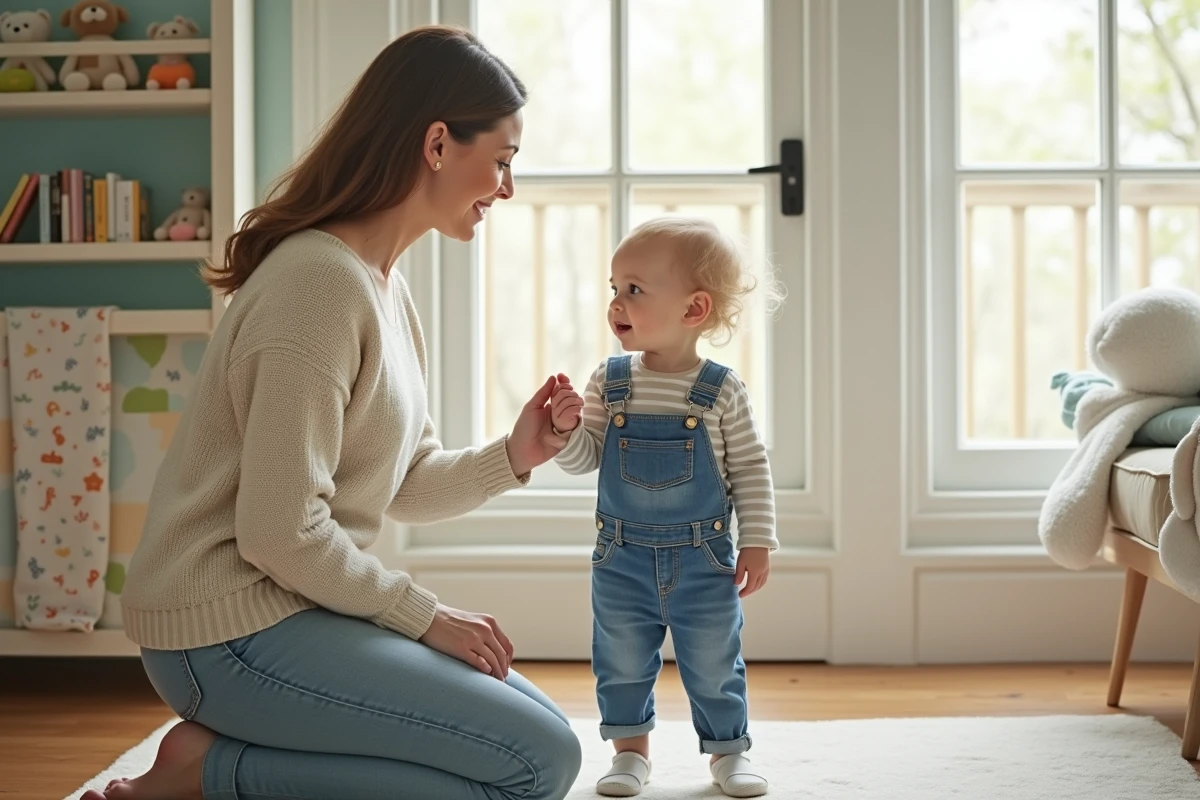
Supporting your child’s thirst for discovery also means establishing reassuring markers. Psychomotor development relies on the desire to manipulate, open, pull, and push. But this need to explore requires a solid framework. Installing appropriate protections: door stoppers, outlet covers, secured furniture corners, helps prevent accidents while allowing the child to exercise their dexterity and coordination without hindrance.
Respect your child’s pace of progression. Supporting does not mean anticipating or stifling initiative, but observing, verbalizing actions, encouraging repeated attempts. Doing together, showing how a knob works, naming the gestures, explaining cause and effect: every interaction becomes a source of learning, reassures the child, and strengthens their sense of security.
At each stage, offer activities related to their current skills: stacking games, boxes with lids to open, picture books with flaps. These supports stimulate both hand agility and observational skills. Focus on open and protected spaces, allowing the child to move freely, test their balance, and strengthen their muscles and self-confidence.
Ultimately, balancing vigilance and freedom means providing the child with a tailored adventure ground. By securing their environment while multiplying opportunities to experiment, every adult becomes a partner in an awakening that, behind an open door, allows for a thousand unexpected discoveries.