
Clearing a home involves removing all furniture, objects, and waste from a living space within a constrained timeframe. This operation occurs during a move, an inheritance, a real estate sale, or a rental property restoration. The challenge lies not in the volume to be moved, but in the differentiated handling of each category of objects before they leave the home.
Specific waste streams: what standard collection does not take
Most guides recommend stacking everything on the sidewalk or filling a dumpster. This approach clashes with local collection rules, which vary from one municipality to another. The volume accepted by municipal bulky waste collection may be capped, and a time slot for collection often needs to be reserved in advance.
Electrical and electronic devices pose a distinct problem. They must not be mixed with standard bulky waste. There are three options: return to the store, drop off at an appropriate recycling center, or a dedicated collection point. Leaving an old refrigerator with the furniture on the street can lead to outright refusal by the collection service.
Some items fall under regulated streams and cannot be dropped off at a standard recycling center or with bulky waste:
- Asbestos, found in some old floor coverings or false ceilings, requires specific packaging and must be deposited at a certified facility.
- Chemicals (paints, solvents, pesticides) must go to a hazardous household waste collection point.
- Gas bottles remain the property of the supplier and must be returned to them, not abandoned in a garage.
- Used tires are taken back by distributors or garages, not by municipal collection.
Identifying these items before starting the sorting process avoids unnecessary trips and refusals at the recycling center. Making a quick list of the items involved, room by room, takes less than an hour and saves a whole day on the overall schedule.
To explore the solutions from cmadeco.eu for your home, simply assess the actual volume to be handled and the nature of the items involved before choosing a method.

Reuse before disposal: a structuring step
The AGEC law has strengthened the development of spaces dedicated to reuse in recycling centers and the funding of repair funds. In practice, reuse is organized before loading, not after. Once items are piled into a truck or dumpster, sorting becomes impossible.
The most effective method is to isolate reusable items right from the inventory phase. Contact the local resource center or associative network before setting the evacuation date. These organizations accept furniture, functional appliances, dishes, books, and textiles in good condition, but they often impose conditions: appointment scheduling, acceptable condition of items, delivery on-site, or planned pickup.
Checking in advance what resource centers accept helps avoid a refusal on the day of drop-off. Some do not take mattresses, while others refuse appliances older than ten years. Recycling only concerns items that are truly unusable.
Antique furniture and valuable items
A home occupied for several decades may contain antique furniture whose market value exceeds that of new items. Before sending everything to the recycling center, have the pieces that seem dated appraised. A solid wood dresser, an Art Deco lamp, or regional pottery can find buyers on specialized sales platforms or from local antique dealers.
This step does not slow down the clearing process if it is integrated from the start. Photograph potentially interesting pieces during the initial inventory, publish the ads immediately, and set a short response deadline. What is not sold within the week goes to donation or recycling.
Zone sorting method for quickly emptying a home
Sorting room by room remains the most common method, but it generates a recurring problem: each room produces items that belong to multiple categories (to keep, to give, to recycle, to throw away), and without a clear destination zone, these flows mix.
Assign a physical zone to each destination before opening the first closet. An empty room or a corner of the garage serves as a “donation” zone, another as a “recycling center” zone, and a third as a “for sale” zone. The hallway or entrance remains free for circulation.
Order of rooms: start with storage spaces
Start with the basement, attic, garage, and hallway closets first. These spaces usually contain items that are rarely used, allowing for quicker sorting decisions. By emptying them first, you free up space to temporarily store items awaiting departure.
The living areas (living room, kitchen, bedrooms) come next. The kitchen deserves special attention: household chemicals do not go with regular trash. Leftover drain cleaner, paint stripper, or anti-moss products go to hazardous waste collection.
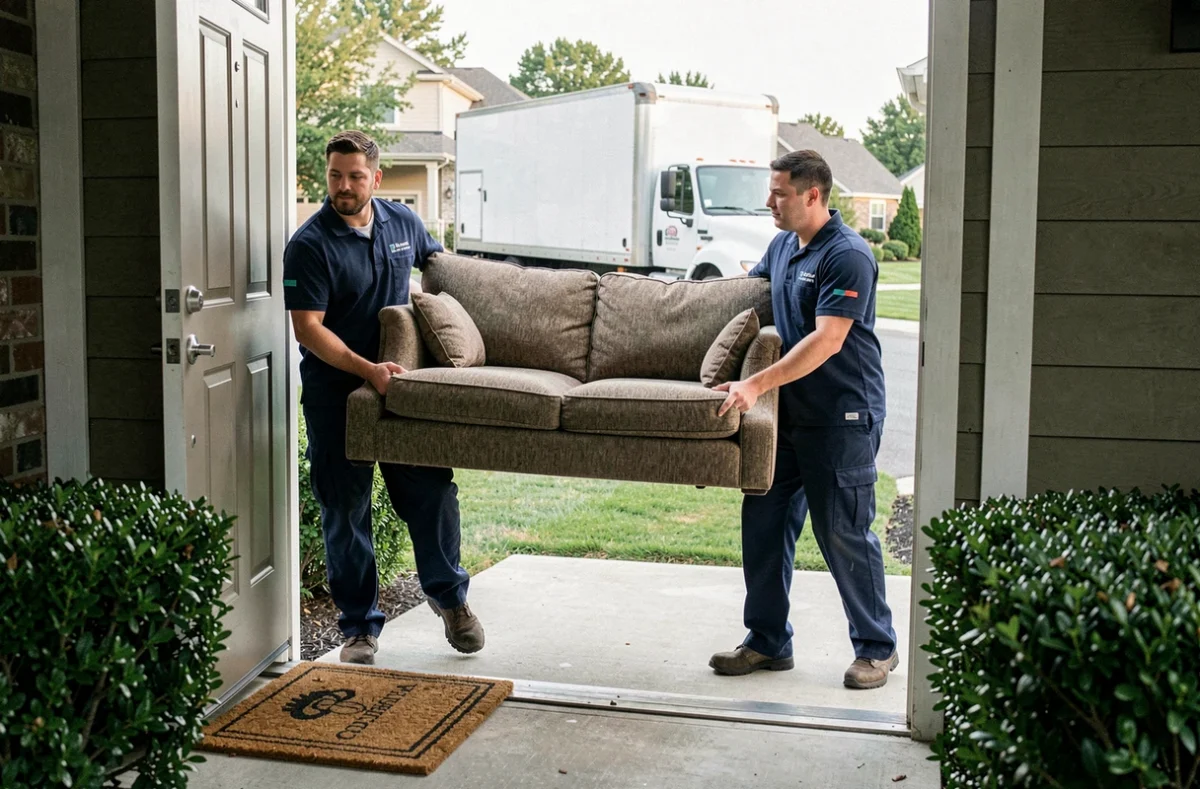
Hiring a professional clearing service: selection criteria
When the volume exceeds the capacity of a personal vehicle or the timeframe is too short for self-sorting, a clearing service provider becomes a concrete option. The cost depends on the volume, the accessibility of the home (no elevator, limited parking), and the nature of the items.
Before signing a quote, check three points:
- The provider must guarantee sorting and orientation towards regulated streams (no illegal dumping).
- The quote must detail labor, transport, and waste treatment costs separately.
- The responsibility of the client remains if the waste is illegally abandoned by the provider. Request a waste tracking slip for sensitive materials.
The legal responsibility remains with the owner as long as the waste has not reached a certified facility. This point, rarely mentioned in standard quotes, justifies choosing a registered professional over an informal operator.
Realistic timeframe based on area
A studio can be cleared in one day with two people. A well-filled three-room apartment requires two to three days of actual work. A house with a basement, attic, and outbuildings may take a full week. Allow a margin of two additional days for unforeseen circumstances (items needing appraisal, full recycling center slots, delayed municipal collection) to avoid being late the day before an inventory check.
Clearing a home is not just about moving items from point A to point B. Each category of item has its stream, each municipality has its rules, and the reuse schedule conditions the smoothness of the entire process. Preparing these three variables before touching the first piece of furniture transforms a chaotic chore into a controlled operation.