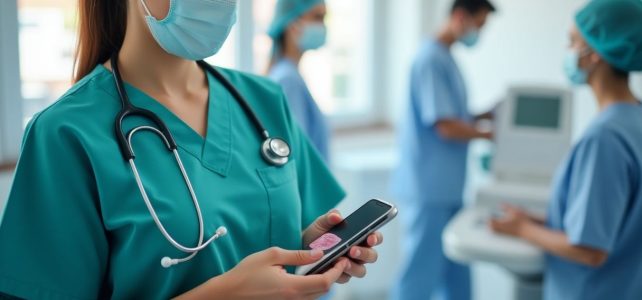
In the modern world of healthcare, the role of nurses is essential. These dedicated professionals use a variety of nursing equipment to carry out their daily tasks with precision and efficiency. Medical equipment, often discreet but oh so vital, supports every intervention by ensuring not only the quality of care but also the safety of the patient. From routine examinations to emergency interventions, every tool has its place in the nursing arsenal.
Whether it’s to administer medication, monitor vital signs, or ensure patient comfort, nursing equipment is an indispensable ally in every clinical situation.
Basic equipment: the foundations of nursing care
To ensure quality care, basic nursing equipment plays a fundamental role. These tools, often considered ordinary, are actually at the heart of daily practice.
Thermometers, stethoscopes, and blood pressure monitors make up the classic trio of monitoring tools. Each instrument provides essential data on the patient’s health status.
Thermometers, whether digital or infrared, allow for quick and accurate measurement of body temperature.
Stethoscopes, true extensions of the nurse’s ear, help listen to the internal sounds of the body, whether it’s the heartbeat or respiratory sounds.
As for blood pressure monitors, they measure blood pressure, a key indicator of cardiovascular health.
Syringes and needles are also a crucial element, allowing for the safe administration of medications, whether through intravenous or intramuscular injection. Forceps and scissors, while seemingly innocuous, play a vital role in the handling and preparation of dressings. These instruments ensure the sterility and precision required to avoid infections and ensure rapid healing.
Survival equipment: essential tools in emergency situations
When an emergency arises, speed and efficiency are paramount. The tools used in these critical moments must be reliable and immediately available.
- Defibrillators: These devices save lives by restoring normal heart rhythm through electric shocks. Their rapid use is often decisive.
- Ventilators: Essential for patients with breathing difficulties, mechanical ventilators ensure adequate oxygenation.
- Emergency carts: They gather all the necessary equipment for quick intervention, containing everything from medications to resuscitation instruments.
Regular maintenance and control of this equipment are essential to ensure its effectiveness when needed. Nurses are trained to use these tools competently, thus ensuring life-saving interventions when every second counts.
Innovative instruments: towards modern nursing practice
Over the years, technological evolution has led to the introduction of innovative equipment that changes the way nursing care is provided.
Nursing equipment such as smart infusion pumps allow for precise control of fluid and medication administration, thereby reducing the risk of errors. Vital signs monitors, now digital and portable, provide continuous real-time monitoring, immediately alerting in case of anomalies.
New technologies such as telemedicine and dedicated mobile applications leverage the internet to offer remote care solutions. They enable quick and effective communication between patients and healthcare professionals, thus improving access to care.
These technological advancements do not replace human skills but enhance nurses’ capabilities, allowing them to focus more on direct care and the patient relationship.