A mirror weighing ten kilos or more leaves no room for approximation. Manufacturers warn, and the instructions confirm: each installation solution without screws or plugs has its own weaknesses. The promises displayed on adhesive tape packaging often seem like wishful thinking once faced with the reality on the ground. In these conditions, it’s difficult to blindly trust these alternative methods.
And yet, the range of no-drill systems expands each year. Preserving the condition of floors and walls has become a priority for many individuals, whether renters or homeowners. But behind each trick lies specific imperatives: compatibility between the support and the surface, weight compliance, stability… It’s impossible to escape a technical reflection. The choice of method depends on the size of the mirror, its back, the wall covering, and often requires daring to try unknown solutions.
Installing a heavy mirror without drilling: myth or real solution?
Installing a heavy mirror without drilling has long been a fantasy. Protecting walls and floors, avoiding irreversible holes: the idea is appealing, no matter where it is in the house. But the market remains tricky. Glues and tapes promise a lot, but on drywall or paint, their reliability crumbles, especially over time and with humidity variations. It only takes a stormy summer to weaken the adhesion.
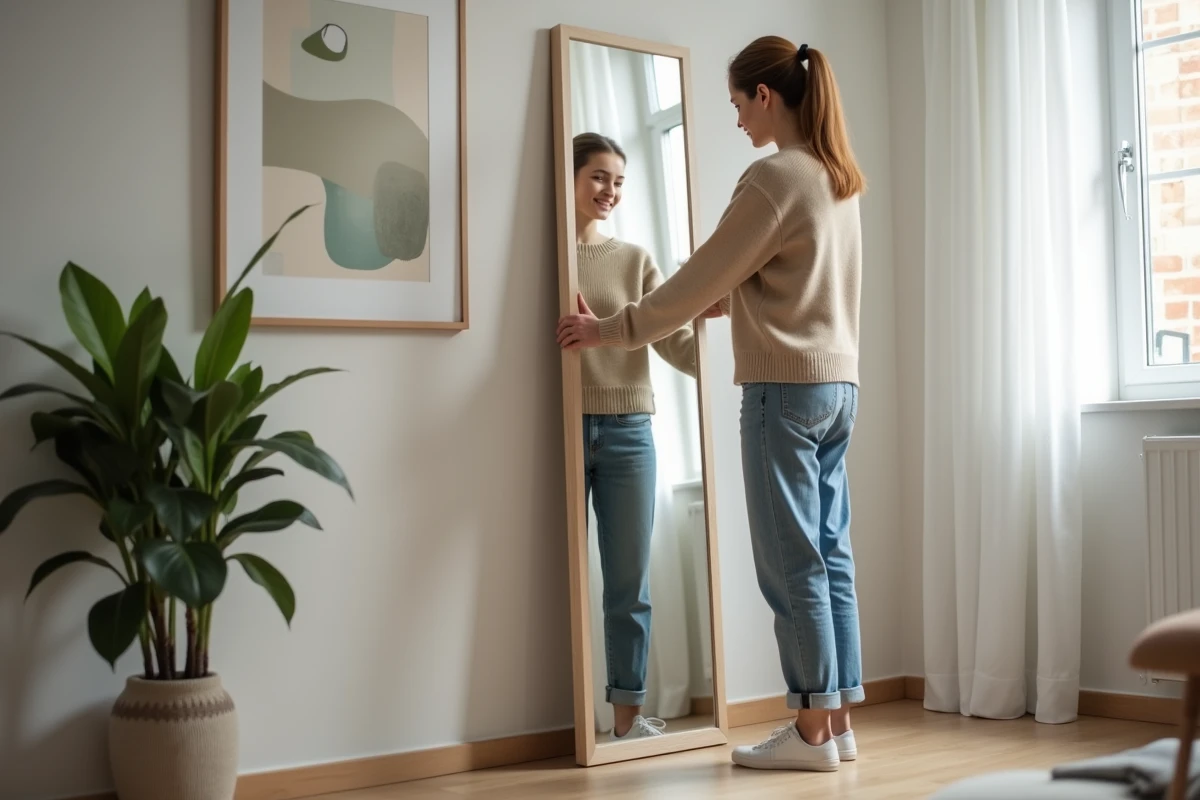
For large mirrors, the slightest misstep can be costly. Some now prefer an inclined installation, simply leaning against the wall, with no fixation at all. Once marginal, this technique is now gaining traction: the floor support for large mirrors combines stability and style. The article ‘Techniques for keeping a mirror upright without floor fixation’ details this approach, which ensures the mirror’s hold without compromising aesthetics or safety.
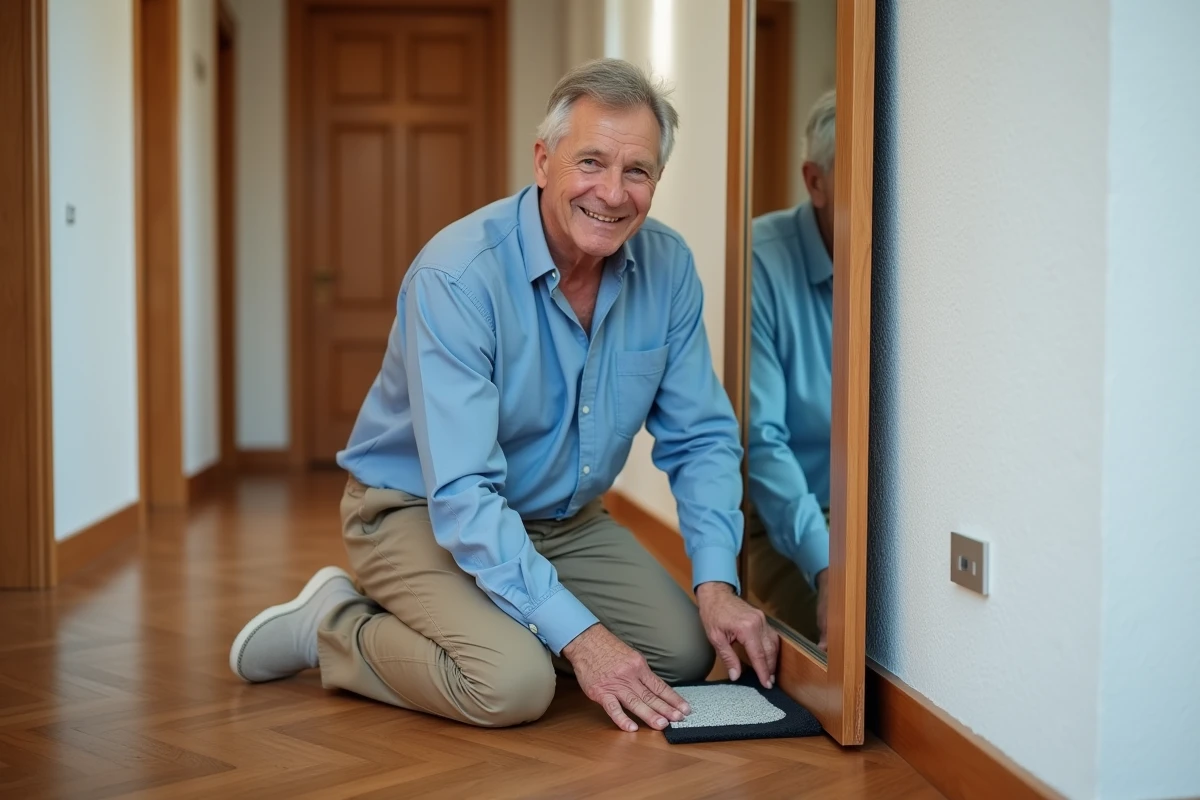
The effectiveness of the device depends on several parameters. First, the room and its floor: a flat surface is mandatory, thick carpets should be avoided, and cleanliness and dryness are essential. The heavier the mirror, the more meticulous one must be. Above 15 kilos, always check that the support is not at risk of deforming or tipping due to a shock. Careful preparation remains the only defense against a decorative project turning into a disaster.
Adhesive strips, hooks, special glues: what options for each type of mirror and wall?
The market offers several alternatives for installing a mirror without drilling, but each responds to specific constraints. Here are the main solutions adapted according to the type of surface and mirror format:
- Double-sided adhesive strips: ideal for smooth, clean, and dry walls, tiles, glass, or metal. They are especially suitable for small to medium-sized mirrors, particularly in a modern bathroom where the tiles provide a good grip.
- Special mirror glue: recommended for uneven surfaces like plaster or old drywall. This glue, formulated for glass and metal, offers a solid hold for bulky mirrors, provided a regular and moderate bead is applied.
- Adhesive hooks: useful when the mirror has a suspension system. They distribute the load, minimizing the risk of detachment. Be sure to check the resistance claimed by the manufacturer, especially in humid areas like the bathroom or kitchen.
| Type of support | Ideal surface | Suitable mirror |
|---|---|---|
| Double-sided adhesive strips | Tiles, glass, metal | Small/medium size |
| Special mirror glue | Plaster, paint, drywall | Large size |
| Adhesive hooks | Smooth, dry wall | Mirror with attachment |
Always adapt the method to the context. Success depends as much on the choice of product as on the preparation of the surface: a poorly cleaned or slightly damp wall calls everything into question. To ensure lasting hold, one must combine rigor and common sense at every step.
Safety tips and tricks for a solid installation, without stress or damage
Before starting, weigh the mirror and check the compatibility of the support. On drywall, the margin for error is slim: every kilo must be accounted for. Always read the technical data sheet of your adhesive or glue, without neglecting the preparation of the wall. A greasy or dusty support compromises even the best fixation.
For a calm and durable installation, a few steps are essential. Start by marking your reference points and level lines with a pencil. Take the time to measure, then fix it all at once, without rushing. During installation, press the mirror firmly across its entire surface for several minutes. Handling a large mirror with two people is strongly advised: glass leaves no room for improvisation.
To avoid unpleasant surprises, here are some guidelines to keep in mind during installation:
- Always respect the maximum load indicated on the packaging of the strips or hooks; do not play with the tolerance.
- Allow the glue or adhesive to dry completely, often 24 to 48 hours, before releasing the mirror.
- Pay attention to the finish: check the alignment and remove any air bubbles under the strips for a clean result.
Want to move the mirror or remove it without leaving marks? A hairdryer applied for a few seconds to the adhesive makes peeling it off easier, without tearing paint or covering. This precaution proves valuable, whether in the bathroom or a bedroom. Finally, avoid installing a heavy mirror without fixation in a high-traffic area or near a zone exposed to impacts. Stability always takes precedence over the temptation of a decorative gesture.
At the intersection of technique and design, every successful installation tells the same story: that of a securely placed mirror, and a room transformed without a single speck of plaster on the floor.